


“Never Again”: Lords Fury Over Zambia Poisoning Scandal
09/01/2026
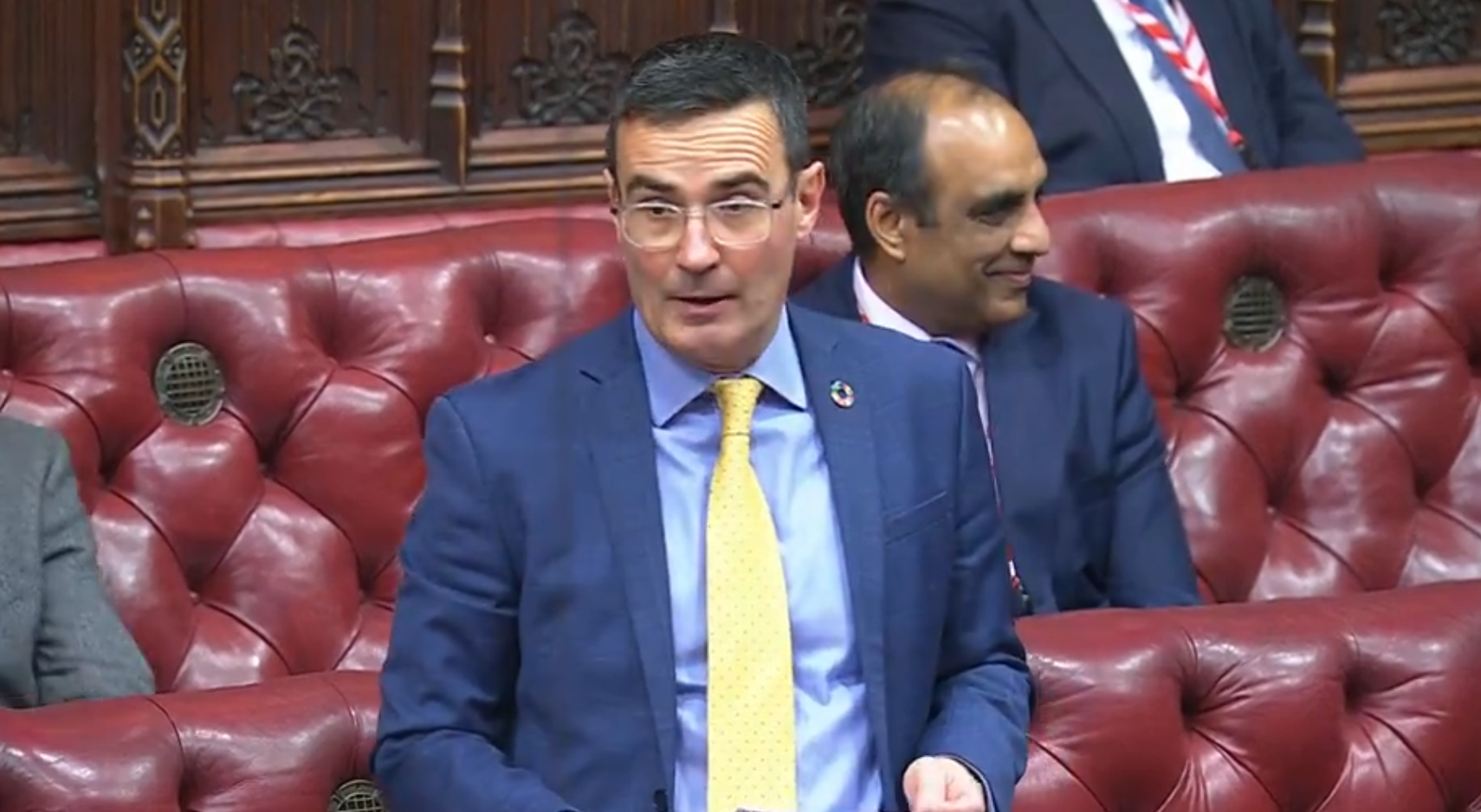
Britain’s peers have sounded the alarm over a shocking public health disaster in Kabwe, Zambia, a town scarred by decades of lead mining and now known as one of the most polluted places on Earth.
That pollution and the lasting legacy of British colonialism was the subject of a House of Lords debate yesterday with the Development Minister, Baroness Chapman, admitting there were “clear lessons” to be learnt as peers demanded action and accountability.
This is a human tragedy on a staggering scale. The legacy of colonial-era mining has left homes and soil saturated with 6.4 million tonnes of lead waste. The result? Ninety-five per cent of local children have toxic blood lead levels, above the point where the brain is damaged. Medical experts warn any amount of lead in the blood can harm the brain, with lasting damage to memory, learning and behaviour and physical symptoms including anaemia, stunted growth and organ damage. In total, an estimated 140,000 people are living with lead poisoning.
Lord Oates brought the crisis into sharp focus in the debate with the story of Loveness, a mother from Makululu, in Kabwe. Her six-year-old and three-year-old children were constantly sick. When doctors tested them, the results were horrifying, showing blood lead levels of 40 and 45 micrograms per decilitre, eight times the World Health Organization’s danger threshold.
To grasp the scale, this was compared to Flint, Michigan. Its water contamination scandal led to a £467 million settlement for 90,000 people, all with blood lead levels below 10. Kabwe’s numbers are off the charts.
Baroness Chapman spoke of the “enduring scars from mining on communities” and said: “Never again should we see this kind of impact on a community. There are clear lessons from Kabwe.”
The debate carried a powerful moral charge. Lord Oates pressed the Government on the UK’s responsibility, warning the new global scramble for resources risks creating “yet more Kabwes.” Peers across political parties condemned the situation as a “scandal” and a “horror,” insisting Britain must help address mining legacies across former colonies.
Questions were also raised over the Government’s partnership with Anglo American. Lord Hain challenged plans to channel £4.5 million of UK taxpayer money into the company’s Impact Finance Network programme, citing serious allegations of harm, from miners with TB and silicosis to compensation delays and asking whether British funds are backing the right kind of “inclusive growth.”
Rachel Palma Randle, Director of Action for Southern Africa (ACTSA), said:
“The situation in Kabwe is a public health catastrophe which no one is willing to take responsibility for. Children especially face serious and long-term impacts to their physical and mental health as the result of the lead poisoning. This is not just about lessons which need to be learnt for the future but about the need for reparations, to support families in crisis.
Communities are living with the toxic legacy of colonial-era mining, and the UK must not turn a blind eye. This is a moment for Britain to step up: to use its influence, to support remediation, health care and compensation, and to ensure the pursuit of critical minerals does not come at the cost of children’s brains and futures. Kabwe’s families cannot wait.”
ENDS
Watch the debate: https://parliamentlive.tv/Event/Index/2bb318d7-b85d-4667-a579-0e9736398f42#player-tabs (from 14:37:48)
Read the transcript: https://hansard.parliament.uk/lords/2026-01-08/debates/E9CAD23B-832D-468B-8D15-78831B388D4C/MiningPollution
Interviews available: Lord Jonathan Oates, Rachel Palma Randle (ACTSA)
Media contact: Julia Lagoutte [email protected] 07521026605
Background information
- The Kabwe Lead Mine in Zambia was an Anglo American Mine for almost 50 years (1925-1974).
- Exposure to lead contamination presents a considerable health risk. There is no safe level of blood lead. Even at low levels, lead causes cognitive impairment and behavioural problems. At high levels it causes developmental disabilities, organ damage, serious brain damage and even death. Lead poisoning can severely harm the health of pregnant women and their unborn children. Average blood levels of young children in the villages closest to the Kabwe mine have been found to be more than ten-fold higher than the reference level set by the WHO.
- Read Life in the World’s Most Polluted Town, ACTSA and Environment Africa’s recent report, which contains the above facts and stories.
- Despite clear evidence that Anglo American South Africa was aware of widespread lead pollution, it failed to ensure that specific remediation measures recommended by international experts were carried out. By the early 1970s, three Kabwe mine doctors had sounded the alarm, raising that children were already falling ill and dying of lead poisoning and recorded extreme blood lead levels (BLLs). Today, thousands of women and children are estimated to have lead poisoning.
- In January 2023, an application for certification of the class action against Anglo American was heard in South Africa and was dismissed in December 2023. However, the Johannesburg High Court granted permission to appeal the judgment. On the 3rd and 4th November 2025, victims sought to overturn the initial certification denial and proceed with their claims. The matter is now with the Supreme Court of Appeal in South Africa, and a judgment is awaited.
- The class action is the claimants’ only hope of obtaining access to justice. In the five years during which communities have been waiting for clarity on whether the class action will proceed, women and children in Kabwe – many of whom have been born during this period – have continued to be poisoned by lead.
- Visit the Children of Kabwe website for more information: www.childrenofkabwe.com/
- The UK released its critical minerals strategy in November, which attracted criticism from communities worldwide as well as NGOs. Communities living on the frontlines of mining operations have warned that the extraction and processing of these minerals has its own destructive environmental and human impacts at local and global levels, from water scarcity and ecosystem collapse to forced labour and violent attacks on Indigenous communities.
- In November 2025, Anglo American announced a ‘partnership’ with the FCDO in which the UK taxpayer, starting this month, will provide up to £4.5 million (ZAR100 million) over four years to support Anglo American’s Impact Finance Network (IFN) programme in South Africa.
- Anglo American was one of a number of mining companies required by a landmark 2018 victory to compensate miners with devastating silicosis and TB that was contracted while working for these companies. Yet 84% of these miners have still not received compensation 7 years later. Anglo American and the other mining companies involved are accused of delaying the process.