


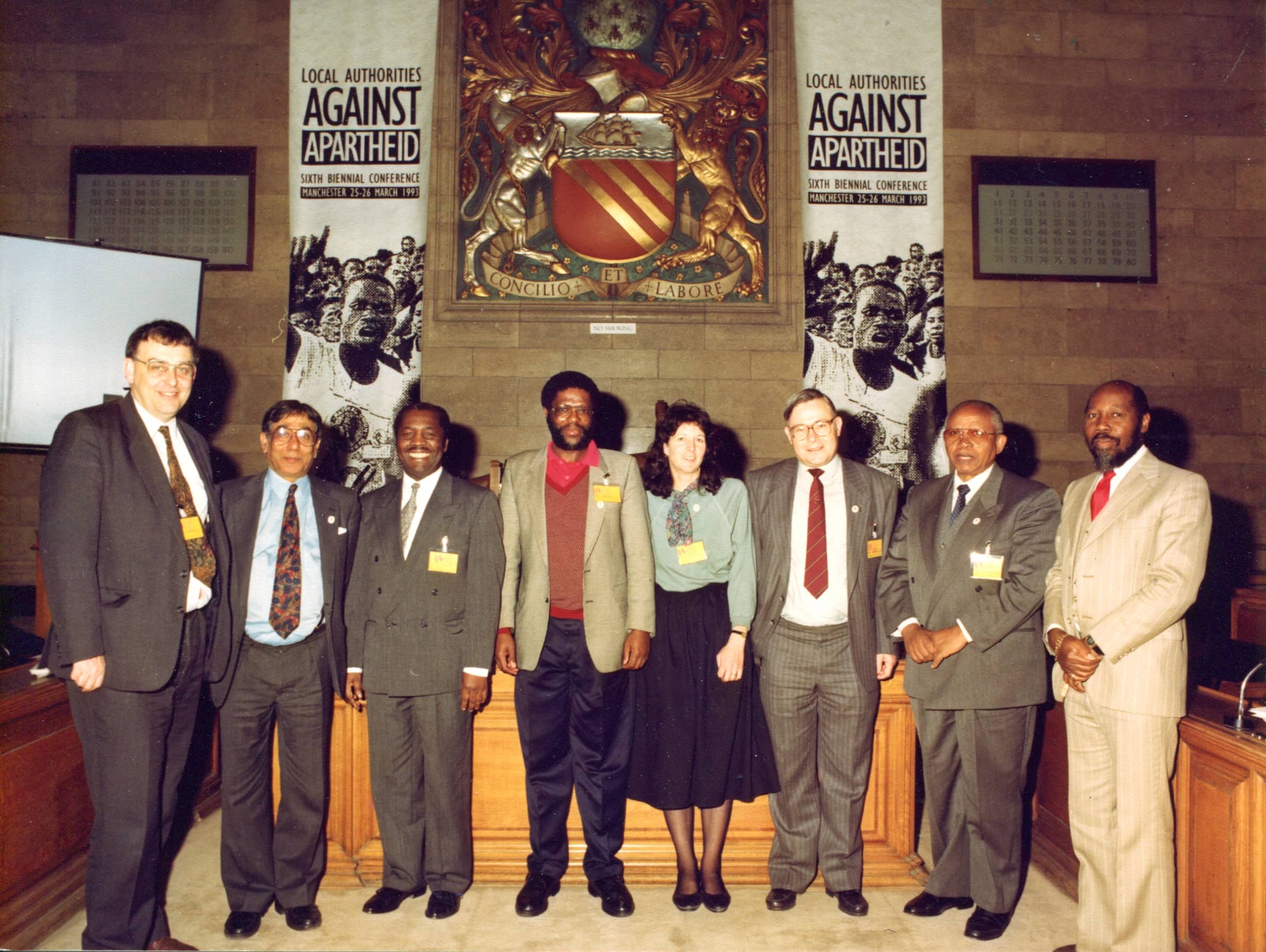
The current proposed legislation seeking to make boycotts illegal echoes a part of the 1988 Local Government Act which was introduced by Margaret Thatcher with the intention of preventing local authorities from boycotting the goods of apartheid South Africa, attempting to shore up the regime’s economy. This, of course, was a compliment to the effectiveness of the boycott campaign run by our predecessor organisation, the Anti-Apartheid Movement. It was also a recognition that the moral and ethical argument had been lost, as otherwise legislation would not have been necessary.
The 1988 Act sought to curtail the ability of local authorities like Glasgow, Sheffield, Camden, Islwyn and a host of others not to buy apartheid goods. Starting from the 1960s, local authorities had been responding to the call to boycott apartheid goods. By the mid-60s, 54 councils banned apartheid goods in their offices and schools. In 1975 the huge Strathclyde Council imposed a ban. In 1981 Sheffield became the first local authority to pledge to end all links to apartheid South Africa. Many others followed and Local Authorities Against Apartheid was formed to work alongside the Anti-Apartheid Movement and co-ordinate local authority solidarity with people living under apartheid in South Africa.
The legislation did not work. By the time the Act came into effect, the apartheid regime was collapsing. Chase Manhattan Bank had refused to roll over the apartheid regime’s debt, effectively bankrupting it. Namibia was on the road to independence and the release of Nelson Mandela was looming.
ACTSA, learning from history, recognises that the right to boycott is a principle that has had a massive impact for good in the recent past. International pressure to cut links with the apartheid regime included disinvesting, not buying goods produced by it, and not providing cultural ‘cover’ for a regime that the UN had deemed was a crime against humanity. Democratically elected local authorities should be able to use their resources in ways which do not sustain regimes where human rights are violated. It follows that the principle of the right to boycott continues to be a powerful tool to progress human rights, wherever they are under threat.